Precision Under Pressure: Navigating the Technical Challenges of Directional Boring
- Tech
William N. Ferranti
- 0
- 5 minutes read
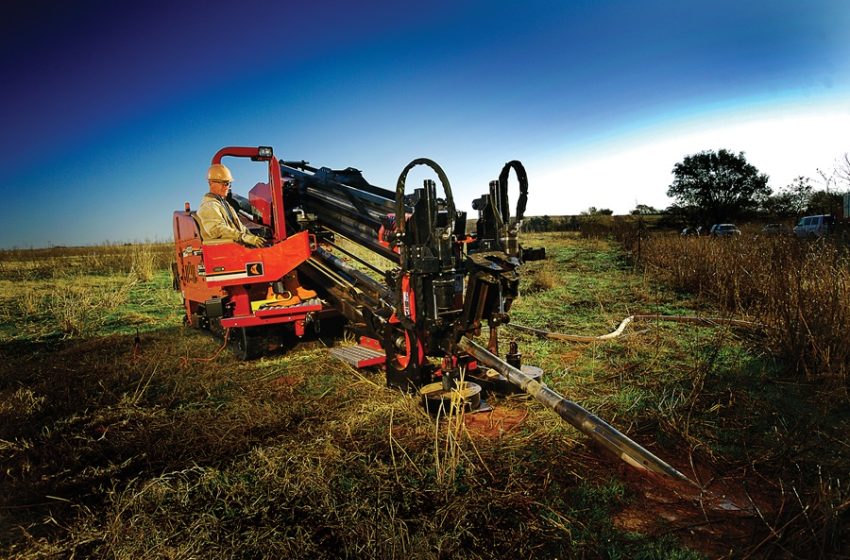
Horizontal Directional Drilling (HDD) is often described as a “surgical” engineering feat. To successfully install a pipe hundreds of meters underground without seeing the drill bit requires a combination of high-end technology, rigorous planning, and mechanical power.
The Three-Stage Process
A successful directional bore typically follows three distinct phases:
- The Pilot Hole: A small-diameter hole is drilled along a pre-planned path. This is the most critical stage, as it sets the trajectory for the entire installation. The drill bit is steered from the surface, often using wire-line guidance systems for deep or complex crossings where high accuracy is paramount.
- Pre-Reaming: Once the pilot bit reaches the exit point, it is replaced with a “reamer.” This tool is pulled back through the hole to enlarge it to a diameter slightly larger than the pipe being installed. Depending on the soil or rock conditions, this may be done in several stages using various recycling and centrifuge systems to manage the drilling fluids and debris.
- Pipe Pullback: The final product pipe is attached to the reamer and pulled through the enlarged hole from the exit pit back to the rig.
Advanced Guidance and Steering
Accuracy is the hallmark of professional directional boring. To achieve this, engineers utilize sophisticated locating electronics. For complex projects, Wire-Line Guidance Systems provide real-time data on the exact depth and pitch of the drill head. This allows for “twinned” crossings—where two pipes are laid perfectly parallel—or for navigating through a “spaghetti” of existing underground utilities in a city center.
When drilling through hard rock, the technical challenge increases. This requires specialized tools like the “Multi-Point Symmetrical Slant” or “Standard Convex” pilot bits. These bits are designed to maintain steering capability even when transitioning in and out of different rock formations. Pneumatically powered systems, often supported by high-pressure air and biodegradable rock drill oils, ensure that the operation remains environmentally friendly while delivering the torque necessary to penetrate hard surfaces.
Complementary Technologies: Trenching and Mole Ploughing
While HDD is the star of trenchless technology, it is often used alongside other specialized methods like Mole Ploughing. This is an incredibly efficient way to install small-diameter services (up to 125mm) at depths of up to 1.2 meters. A mole plough creates a narrow, temporary slit in the ground, installs the cable or pipe, and then replaces the soil immediately. It is so non-intrusive that, in many cases, you wouldn’t even know work had been carried out once the machine has passed.
For wider channels where trenchless is not feasible, modern Trenching machinery can cut through any ground type to depths of 2.5m and widths of 700mm, delivering results in a fraction of the time required by traditional backhoes.
By integrating these various technologies—HDD, rock drilling, and mole ploughing—contractors can provide a full turnkey package that addresses every unique challenge of a subterranean project, ensuring that the installation is seamless, economical, and precise.
