How to Tell When a Furnace Is Nearing the End (and What Replacing It Actually Involves)
- Home Improvement
Robert Desauza
- 0
- 8 minutes read
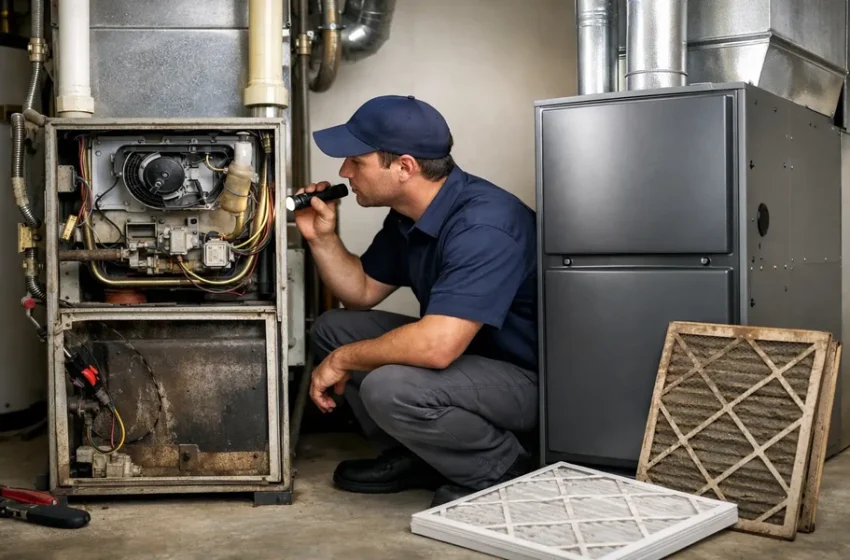
Your furnace will give you warnings. Most homeowners ignore all of them until the house is cold on a Sunday night in January. I’ve watched this play out in more homes than I can count, and the pattern is almost always the same: short cycling for a month, a strange smell for a week, then a hard failure at the worst possible time. The point of this guide is to help you catch the warning signs early so you’re planning a replacement instead of reacting to one.
Here’s the short version. A furnace is usually near the end when repairs start stacking up, when it cycles on and off constantly, when your gas bill climbs without a change in how you heat, or when it crosses the 15 to 20 year mark. Any one of those is worth a look. Three of them together means you should start shopping. If you’re already there, Heater replacement services in Hampshire County can get you a real assessment instead of a guess, and that’s the difference between an emergency and a plan.
What follows is the checklist I’d run through if this were my own house, plus a plain look at what a replacement actually involves so nothing blindsides you when the crew shows up.
What Does a Dying Furnace Actually Sound Like?
It gets loud in ways it didn’t used to. A healthy furnace has a steady, low hum. A failing one develops a personality. You might hear banging when it kicks on, a high whine that wasn’t there last winter, or a rattle that fades once the blower warms up. None of those are normal, and each points to a different part wearing out, from the blower motor to loose ductwork or a cracked heat exchanger.
Pay attention to the rhythm too. Short cycling, where the furnace fires up, runs a few minutes, and shuts off again, is one of the most common end-stage symptoms. It can come from a failing thermostat, a clogged filter, or a furnace that’s simply too big for the ductwork it’s attached to. Sometimes it’s a cheap fix. Sometimes it’s the system telling you it’s tired.
My rule of thumb: if a technician can point to the exact part and the repair is under a few hundred dollars, fix it. If the diagnosis is fuzzy or the fix is a big chunk of what a new system costs, put that money toward the replacement instead.
The Cost Math Most Homeowners Get Wrong
People tend to compare a repair bill to a replacement bill and pick the smaller number. That’s the wrong comparison. The right one is what you’ll spend over the next five years. Add up what you’ve already spent on repairs this season, then ask what a new system would cost you in the same span.
The widely used rule in the trades is simple. If a furnace is past roughly half its expected life and a repair costs more than a third of a new system, replace it. The Department of Energy publishes baseline guidance on furnace lifespans and efficiency that backs up that general range, and I’d trust a rule of thumb that’s survived decades of field use over any single sales pitch.
There’s a quieter cost too. An aging furnace loses efficiency the way an old car loses gas mileage. It still runs, it just runs worse. You feel that mostly in the winter bills, and you don’t notice it happening month by month until you look at a full season of statements side by side.
Where a Replacement Gets More Complicated
Swapping a furnace isn’t like replacing a light bulb. The new unit has to match your ductwork, your home’s size, and your existing venting setup. Older homes often have chimney venting that a modern high efficiency furnace can’t use without changes. That’s usually the surprise cost, and it’s the reason a decent contractor measures your house and inspects your venting before quoting a number.
You’ll also run into efficiency ratings, and they matter more than the sticker suggests. Higher efficiency models cost more upfront and save more on fuel over time, but the savings only show up if the unit is sized correctly. An oversized furnace heats fast and then sits idle, which shortens its life. Undersized does the opposite. Sizing is the whole game.
Ask for a load calculation, not a rule of thumb. If a contractor quotes you a furnace in fifteen minutes without measuring, keep calling. The good ones take their time, and their quotes reflect what your house actually needs.
A Checklist You Can Run This Week
- Change the filter and note whether the short cycling stops.
- Write down every odd sound over three days, with the time of day.
- Pull your heating bills from the last two winters and compare the same months.
- Check the age of the unit on the data plate, usually near the burner access door.
- Count how many repairs you’ve paid for in the past two years.
Once you’ve got that list in front of you, the decision usually makes itself. You’ll see whether you’re in “one more repair” territory or “start calling for quotes” territory. If you’re not sure, that’s the moment to get a second opinion from a tech who isn’t trying to sell you anything that day.
The Rebate and Efficiency Question
Before you settle on a model, check what your state and utility currently offer for high efficiency equipment. Programs change, and the details are worth a phone call or a look at your utility’s site. The Environmental Protection Agency has broad background on energy efficiency programs that can point you in the right direction before you start comparing quotes.
Here’s a habit I’d encourage: get three quotes on paper, itemized by equipment, labor, and venting changes. Anyone who won’t itemize is telling you something. Compare the line items, not just the totals, because a cheap number that skips venting work is going to grow by the time the truck leaves.
And schedule it in the shoulder season if you can. Late spring and early fall are quieter for every HVAC shop in the region, which means faster appointments and more patience on the quoting side. Waiting until the first hard freeze means you’re competing with everyone else whose furnace just quit.
So When Do You Pull the Trigger?
If your furnace is over fifteen years old, has needed more than one repair this season, and your bills are climbing, stop waiting for a third symptom. You’re already there. Get quotes now, while you have leverage and time to compare them.
The bigger lesson here is that a furnace rarely fails without warning. It just fails after a stretch of warnings nobody acted on. Run the checklist, compare the numbers honestly, and treat the replacement as planned work rather than an emergency. That shift alone saves most homeowners money and a cold night or two.
If you want to skip the guesswork, schedule an inspection before the heating season hits and find out where your system really stands. Worst case, you get a clean bill of health and peace of mind for another winter. Best case, you find the problem while it’s still a decision and not a disaster.
