How to Know When It’s Time to Replace Your Garage Door Opener
- Home Improvement
Ferina Jenny
- 0
- 9 minutes read
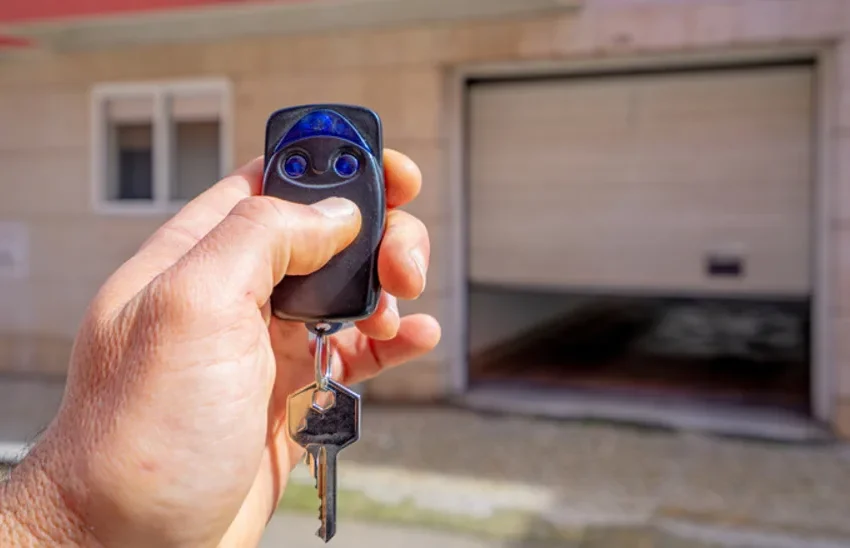
Your garage door opener has quietly opened and closed that door thousands of times without a word of thanks. Then one morning it groans, hesitates, and leaves you standing in the driveway in the rain. Most homeowners wait for that exact moment before they act. By then, the problem is already overdue by a year or two.
This guide gives you a clear, practical way to read the warning signs before the full failure hits – and a decision framework for figuring out whether a repair or a full replacement is the smarter call.
Why This Decision Matters More Than You Think
Garages are not a niche part of American housing. According to the U.S. Department of Energy’s 2017 American Housing Survey analysis, 66% of all occupied housing units in the United States had a garage or carport. That means the garage door opener is, for the majority of homeowners, the most-used mechanical entry point in the house. A failing one is not a minor nuisance. It’s a security gap, a daily inconvenience, and a liability if it falls on a vehicle or, worse, a person.
And yet most people treat opener replacement the way they treat replacing a water heater: they wait until it’s catastrophically broken, then panic-shop on a deadline. You do not have to do that.
The ROAD Framework: Four Failure Signals to Watch
I use a simple four-category check I call ROAD to evaluate whether an opener is aging out. Run through each one every year, and you’ll almost never be caught off guard.
R – Response time. A healthy opener reacts within one to two seconds of pressing the button. If yours hesitates noticeably, or you find yourself pressing the button twice out of habit, the logic board or the receiver may be degrading. This is worth noting but not always a replacement trigger on its own.
O – Operational noise. Chain-drive openers are inherently louder than belt-drive models, but every opener has a baseline sound you learn over time. Grinding, clunking, scraping, or a new high-pitched whine are all sounds that were not there before. They usually mean worn gears, a failing trolley, or a motor bearing on its last miles. Noise changes, not just noise, are the signal.
A – Age. The practical service life of most residential garage door openers runs between 10 and 15 years with routine maintenance. If yours is pushing past that range, the cost of the next repair often rivals or exceeds the cost of a new unit, especially when you factor in technician call fees. At that age, you’re fixing a car with 200,000 miles: possible, but diminishing returns.
D – Door behavior. The opener and the door are a system, not two separate things. If the door reverses before closing, stops partway, or vibrates more than usual, the opener’s sensors or motor may be struggling to compensate for a door that’s slightly out of balance. Fixing the opener without addressing the door – or vice versa – often produces recurring problems.
Run through ROAD, and you get a fast, honest picture. Two or more flags lit up at once? That’s a replacement conversation, not a repair conversation.
Repair or Replace? A Honest Cost Comparison
The repair vs. replace decision is really a math problem with one unknown variable: how long the repaired unit will last. Here’s a simple table to anchor your thinking.
| Situation | Likely Call | Reasoning |
|---|---|---|
| Opener under 7 years old, single issue | Repair | Plenty of service life remaining; isolated fixes are cost-effective |
| Opener 7-12 years old, recurring issues | Evaluate | Weigh repair cost against 40-60% of new unit cost; replacement may win |
| Opener over 12 years old, any significant failure | Replace | Parts availability shrinks; next failure likely within 12 months |
| Opener lacks modern safety features | Replace | Pre-1993 openers may lack auto-reverse; non-negotiable safety upgrade |
One detail that catches homeowners off guard: if your opener predates 1993, federal safety standards requiring automatic reversal were not yet mandated. That is a replacement, full stop. No repair justifies keeping a unit that cannot detect an obstruction under a closing door.
Florida Homeowners Have a Specific Problem
Heat and humidity accelerate every failure mode described above. The combination of high summer temperatures and persistent humidity in central and coastal Florida puts extra stress on drive mechanisms, circuit boards, and the rubber seals that keep the motor housing protected. A garage opener that lasts 14 years in Minnesota may only reach 10 in Port Richey or Clearwater.
Picture this: a unit installed in 2012 sits in an un-air-conditioned garage through a dozen Florida summers. By 2024 the chain is showing visible rust, the wall control occasionally needs three presses to respond, and the door reverses about once a week for no apparent reason. That’s not a repair job. That’s a unit that’s been generous past its natural life, and any technician worth calling will tell you the same thing.
If you’re in that situation, looking into garage door opener replacement in Pasco County, Florida, from a local company familiar with the regional climate is a much better path than ordering a generic unit online and hoping for the best. Local installers know which models handle the heat-humidity combination best and can set safety force limits correctly for the conditions your door actually operates in.
What to Look for in a Replacement Unit
The residential garage door opener market has changed considerably in the past decade. Battery backup is no longer a luxury feature – it’s a practical necessity in storm-prone regions where power outages are seasonal. Smartphone integration through dedicated apps lets you check door status remotely, which matters for anyone who has driven ten miles before wondering whether they left the garage open.
Drive type still matters. Belt-drive openers are the quietest option and are worth the modest price premium for attached garages with living space above them. Chain drives are durable and cost less upfront. Direct-drive models, which move the trolley by driving the motor itself along a stationary chain, eliminate most moving parts and are an excellent long-term investment for homeowners who want to minimize future maintenance.
Also consider horsepower honestly. Most single-panel and sectional doors under 2,000 square feet of living space need no more than 1/2 HP. Heavier insulated doors or doors over nine feet tall benefit from 3/4 HP. Overpowering the application does not give you extra life; it just burns motor cycles faster on the soft stops.
The growing prevalence of attached garages in new construction reinforces just how central this decision is: NAHB’s 2025 analysis of Census Survey of Construction data found that 65% of newly completed single-family homes in 2024 featured two-car garages, making the opener one of the most-used daily mechanisms in modern residential life.
“The garage door is the largest moving part of your home – and the opener is the brain controlling it.”
That framing, widely shared among residential door professionals, captures why treating a failing opener as a minor inconvenience is a mistake. The mechanism is load-bearing, safety-critical, and used multiple times every single day.
Three Things to Do Before You Call a Technician
- Check the batteries in the remote first. Yes, genuinely – a weak battery produces the same symptom as a failing receiver. Replace it before you schedule a call.
- Look at the photo-eye sensors. The two small sensors at the base of each door track need to be aligned and clean. A buildup of dust or a slight knock can trigger constant reversal. Wipe them with a dry cloth and check the alignment LED.
- Listen to the opener with the door disconnected. Pull the red emergency release cord and manually operate the door. If the door itself moves smoothly and quietly on its own, the problem is almost certainly in the opener. If the door is stiff, binds, or rattles, both systems need attention.
These three steps take under five minutes. They narrow your diagnosis before a technician arrives, which saves time and often saves money.
The Short Version
Don’t wait for the door to strand you. Run the ROAD check annually, take Florida’s heat and humidity seriously as an accelerating factor, and use the repair-or-replace table to make the call based on age and repair cost rather than habit or hope. A well-matched opener installed correctly will give you a decade or more of reliable, quiet operation. That’s a good return on a decision most homeowners put off until the worst possible moment.
What’s the one sign your own opener is showing right now that you’ve been ignoring?
